Congratulations! -
Your Existing Business Starter Kit Is On Its Way:
Check your email for the Existing Business Buyer’s Starter Kit.
A Brief Welcome Video from Curtis Junie Brown
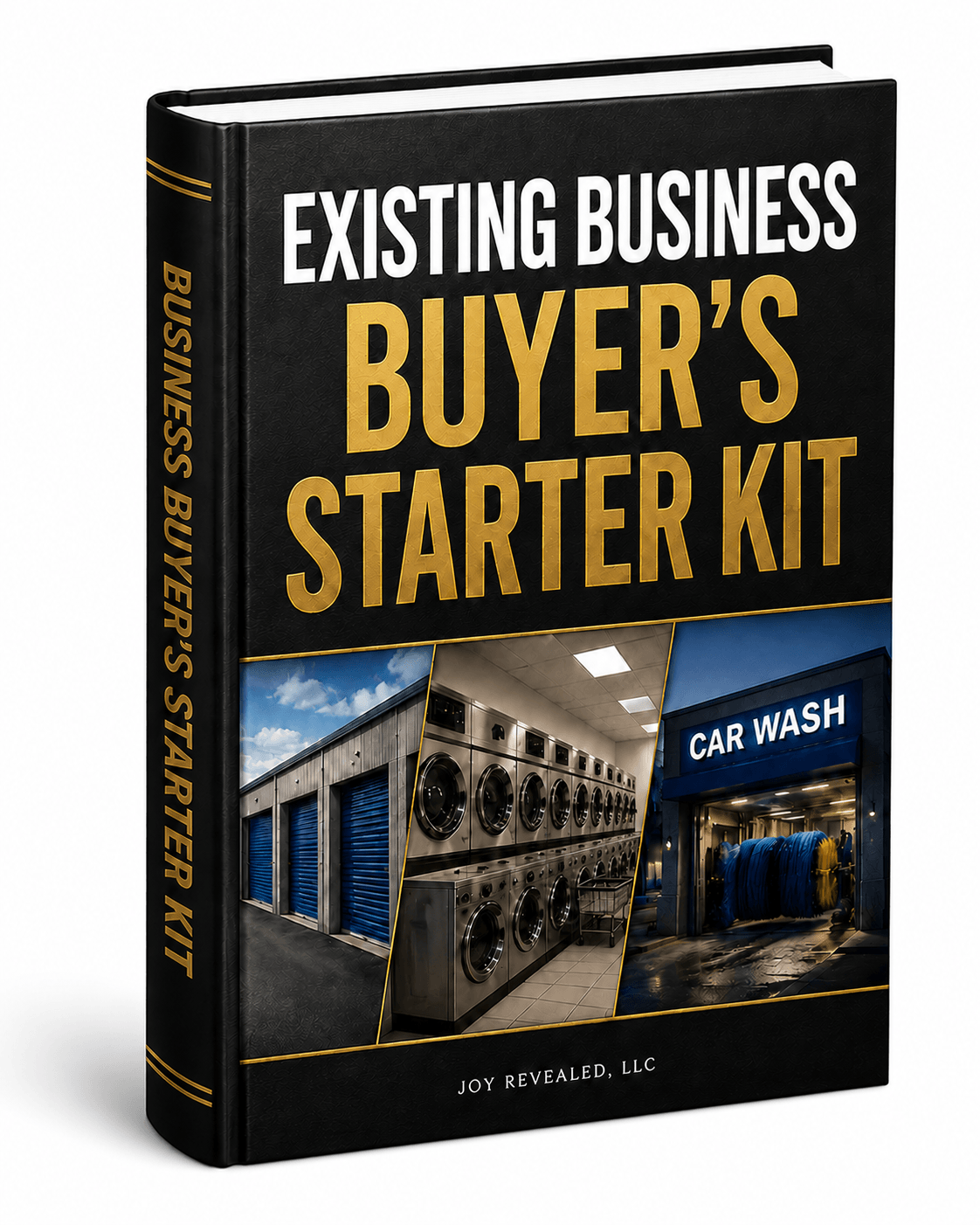
Click the Book Below to View the Starter Kit Online:
Frequently Asked Questions:
1. Do I need a lot of money to buy a business?
Answer:
Business acquisitions can be structured in many different ways, and the amount of personal capital required varies significantly from one transaction to another.
Factors may include the purchase price, the financial performance of the business, the buyer's qualifications, the seller's willingness to participate in the transaction, and the availability of third-party financing or investment capital.
The purpose of this training is to help you understand common acquisition structures and the factors prospective buyers should evaluate before pursuing a transaction.
2. My credit isn't great. Can I still buy a business?
Answer:
Credit is one of many factors that may affect how a particular business acquisition can be structured.
Different lenders, sellers, investors, and other transaction participants may have their own requirements. A prospective buyer should evaluate the requirements and risks associated with each potential source of capital before proceeding.
This information is educational and does not provide loans, credit repair, financing approvals, or guarantees that financing will be available.
3. Do I need business experience to buy a company?
Answer:
Previous business ownership is not necessarily the only type of experience relevant to evaluating an acquisition.
A prospective buyer may have professional, management, operational, sales, financial, or industry experience that can be relevant to a particular opportunity. Buyers may also work with qualified professionals and experienced individuals when evaluating a business and conducting due diligence.
Every acquisition is different, and the experience required will depend upon the particular business, industry, transaction, and financing requirements.
4. What types of businesses should I look for?
Answer:
The objective is to evaluate established businesses with documented operations and financial performance. Ownership involves responsibilities, expenses, uncertainty, and risk. Historical performance does not guarantee future results.
Examples may include:
Commercial property management companies
Dry cleaning businesses
Self-storage facilities
HVAC service companies
Pest control companies
Landscaping companies
Laundromats
Commercial cleaning companies
Other recurring-revenue home and business services
5. How do I find businesses that aren't listed for sale?
Answer:
Publicly available business registrations, licensing records, company websites, professional directories, and other legitimate sources may help buyers identify and research potential businesses. Buyers should use accurate contact information, respect applicable privacy and solicitation laws, and communicate honestly when approaching owners.
6. How long does it take to buy a business?
Answer:
There is no guaranteed timeline. The process may take several weeks, several months, or longer depending on financing, due diligence, negotiations, licensing, legal review, and the complexity of the transaction.
7. What kind of income can these businesses generate?
Answer:
Review verifiable historical records, including tax returns, bank statements, profit-and-loss statements, balance sheets, customer information, contracts, expenses, liabilities, and cash flow. Financial performance and future income vary, and neither revenue nor profitability is guaranteed. Buyers should consult qualified accounting, legal, and financial professionals.
Bonus Question: What if I'm afraid of making a mistake?
Answer:
Every acquisition involves uncertainty and risk. Education, careful due diligence, professional guidance, realistic financial analysis, and well-documented agreements may help a buyer make a more informed decision. They cannot eliminate risk or guarantee that a transaction will close or succeed.
The goal isn't to make a reckless leap.
It's to learn how to make an informed one. Ready to discuss your business acquisition goals? Book an introductory call.
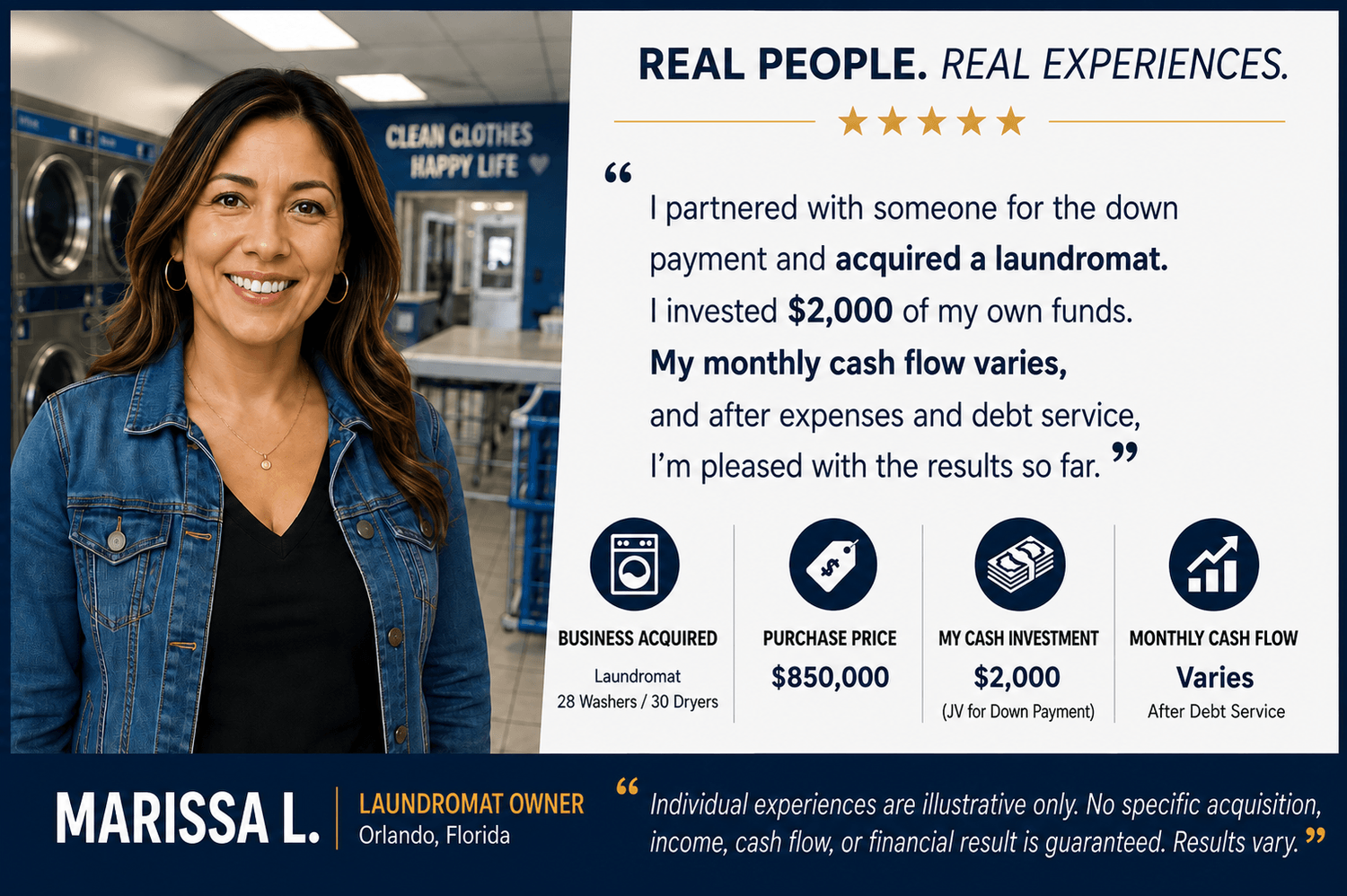
Here's What They're Saying:



© 2026 Joy Revealed, LLC All Rights Reserved.